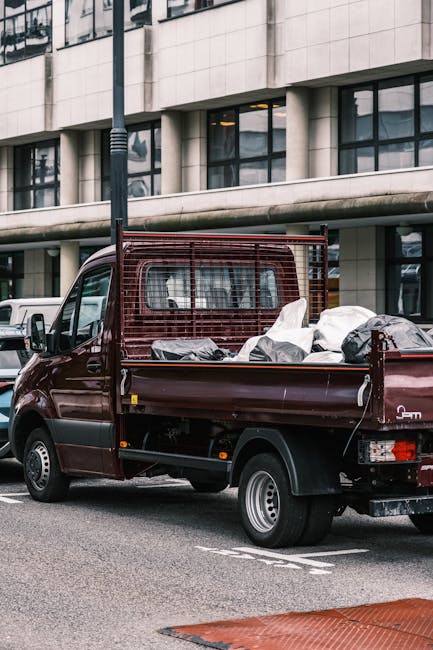
Bulky waste pickup Loughborough Junction Brixton SW9: a practical guide for homes, flats and local businesses
If you are dealing with an old sofa, a broken wardrobe, a pile of renovation offcuts, or appliances that are too heavy for the normal bin day, Bulky waste pickup Loughborough Junction Brixton SW9 is the kind of service that saves time, hassle, and frankly a bit of backache. In a busy part of South London, where stairwells can be narrow and parking can be awkward, getting large items removed properly matters more than most people expect.
This guide breaks down how bulky waste collection works, what to expect, which items are commonly removed, and how to choose a sensible approach for your property. We will also cover safety, compliance, and a few practical tips that make the whole thing smoother. Nothing flashy. Just clear, useful advice you can actually use.
Why Bulky waste pickup Loughborough Junction Brixton SW9 Matters
Bulky items create a different kind of problem from everyday rubbish. They take up space quickly, block hallways, attract dust, and can be awkward or unsafe to move without the right help. In Loughborough Junction and the surrounding Brixton SW9 area, that problem is often amplified by apartment living, shared entrances, limited loading space, and busy streets where you cannot simply leave items outside and hope for the best.
Let's face it: a mattress leaning in a communal corridor is not just inconvenient, it can become a fire safety issue or a complaint from neighbours. A broken fridge in a kitchen, or a stack of old flat-pack boards after a makeover, can make a home feel unfinished and stressful. Bulky waste pickup matters because it restores order fast and reduces the risk of injury, clutter, and fly-tipping.
There is also a practical side many people overlook. Large waste items often need to be separated, handled carefully, and taken to an appropriate disposal or recycling route. That means a proper pickup is not only about lifting heavy things out of the way; it is about making sure the waste moves through the right channel afterwards. If you are sorting a full property clearance, this often links neatly with home clearance or a more focused furniture clearance service.
Expert summary: bulky waste pickup is most valuable when you need speed, access support, and responsible disposal in one go. For flats and terrace properties in SW9, that combination is often worth more than the item itself.
How Bulky waste pickup Loughborough Junction Brixton SW9 Works
The exact process varies a little by provider, but the general flow is usually straightforward. You describe the items, share rough photos if asked, get a quote or estimate, agree a pickup time, and then the team arrives to remove the waste from the property or kerbside. Simple enough on paper. In real life, access and lifting can be the tricky bit.
For example, a two-seater sofa from a first-floor flat may be easy enough if the staircase is wide, but a bulky wardrobe from a top-floor conversion can take more planning than people realise. Sometimes disassembly is required. Sometimes not. A good service will explain that upfront rather than leaving you guessing on the day.
Bulk collection can cover single items, mixed bulky loads, or larger clearances with several types of waste. If your job includes a mix of household items and general rubbish, a broader waste removal service may be more suitable. If you are clearing out a garage, loft, or storage area, it may be worth looking at garage clearance or loft clearance depending on where the clutter has built up.
Here is the basic rhythm you will usually notice:
- You identify what needs removing.
- You check for any restricted items, such as hazardous materials.
- You ask for a quote or book a slot.
- The team collects items safely.
- The waste is sorted for reuse, recycling, or disposal where possible.
That last part matters more than people think. Responsible handling is not a bonus. It is part of the service.
Key Benefits and Practical Advantages
The biggest advantage is obvious: you get your space back. But the real benefits go a bit deeper than that.
- Less physical strain: you avoid moving heavy, awkward, or sharp-edged items yourself.
- Faster turnaround: one pickup can clear what might otherwise take you a whole weekend.
- Better safety: fewer trip hazards, less lifting risk, and fewer items left in communal areas.
- Cleaner presentation: useful if you are preparing a flat for sale, rental, refurbishment, or handover.
- More responsible disposal: items can be handled in line with best practice rather than dumped casually.
There is also a planning benefit. Once the bulky waste is gone, people tend to make clearer decisions about the rest of the space. It sounds small, but a room with one broken chest of drawers feels different from a room that suddenly looks usable again. You will notice the difference immediately.
If the waste is part of a larger project, such as a renovation, there may be overlap with builders waste clearance. If it is office equipment, desks, or filing units, then office clearance is usually the better fit.
Who This Is For and When It Makes Sense
Bulky waste pickup is not just for people who have a mountain of junk. In fact, it is often the most useful for people with just a few awkward items and nowhere sensible to keep them.
It makes sense for:
- tenants leaving a flat and needing items removed quickly
- landlords preparing a property between occupancies
- families replacing old furniture or appliances
- homeowners doing a room refresh or declutter
- local shops, offices, and small businesses clearing storage space
- people dealing with inherited items after a move or probate-related clearance
For a lot of SW9 properties, the practical issue is access. Not the waste itself. A flat above street level, a shared stairwell, or a narrow doorway can turn a simple job into a stressful one. That is where a service designed for lifting, loading, and navigating awkward spaces becomes genuinely useful.
If the job involves a full property or multiple rooms, services like flat clearance, house clearance, or home clearance may give you a better overall result than arranging item-by-item pickup.
Step-by-Step Guidance
Here is the simplest way to approach bulky waste pickup without overthinking it.
- List every item. Write down what needs to go, even if it feels obvious. A forgotten chair or small appliance can change the quote or the vehicle space needed.
- Check what cannot be taken as standard waste. Certain items may need separate handling, especially if they are hazardous, contaminated, or regulated.
- Measure anything unusually large. Not every bed frame needs a tape measure, but a long wardrobe, american-style fridge, or large sectional sofa might.
- Photograph the items and access route. Stairs, lifts, loading bays, and tight corridors all help the provider understand the job before arrival.
- Ask how pricing is structured. Some jobs are priced by load size, some by item, and some by the time and labour involved.
- Prepare the space before the team arrives. Clear the path, unlock gates if needed, and move small loose items out of the way.
- Confirm timing and contact details. That sounds basic, but it avoids delays. A five-minute call at the right time can save a lot of waiting around.
If you are disposing of furniture specifically, the right route may be a dedicated furniture disposal or mattress and sofa disposal service. For kitchen appliances, the correct option may be fridge and appliance removal.
One small tip from real-world experience: if you live in a building with neighbours close by, let them know about pickup day. Not because you need permission, just because it keeps things calm. Nobody likes a lift blocked by a huge wardrobe at 8:15 on a Tuesday morning.
Expert Tips for Better Results
There are a few habits that make bulky waste pickup smoother, cheaper, and less stressful. None of them are complicated, which is probably why people skip them.
- Group similar items together. Keep furniture, appliances, and loose rubbish separated if possible. It helps with assessment and sorting.
- Be honest about access. If there is no lift, say so. If the staircase is tight, say so. Guessing your way through access details rarely ends well.
- Take a quick inventory of hidden extras. Under-bed storage boxes, side tables, and broken stools often get discovered at the last minute.
- Leave dangerous items out of the pile. Paint tins, chemicals, gas canisters, and similar materials may need specialist handling. If you are unsure, check before the collection day.
- Choose the right service type. A small one-off item and a full-room clearance are not the same job. Match the service to the real task.
Truth be told, the best pickups usually happen when the customer has done just a little prep, not a huge amount. The sweet spot is simple. Clear communication, decent access, and no surprises. That is it.
For businesses with confidential paperwork mixed into the clutter, a separate confidential shredding arrangement may be the smart add-on. It keeps sensitive material out of general waste streams, which is exactly what you want.
Common Mistakes to Avoid
Most bulky waste problems are avoidable. The same few mistakes keep cropping up, especially when people are trying to move quickly.
- Leaving items outside too early. It can look untidy and may breach building rules or attract unwanted attention.
- Assuming everything can be picked up together. Some waste types are restricted, and mixing them can create delays.
- Forgetting access constraints. A van may be close to the door, or it may not. Parking in Brixton can be a bit of a puzzle on a busy day.
- Not checking whether the item can be reused or recycled. In some cases, separating recoverable items helps avoid unnecessary disposal.
- Choosing on price alone. The cheapest option is not always the best if it means poor handling, poor communication, or hidden extras later.
Another common one is underestimating volume. One sofa, one armchair, and a dismantled bed frame can suddenly fill more space than you expected. Looks deceiving. Always has been.
If your load includes gardening debris, the better fit may be garden clearance. If it is mainly renovation offcuts and timber, you will probably get a more accurate result from builders waste clearance.
Tools, Resources and Recommendations
You do not need much in the way of equipment, but a few simple tools can make the process easier and safer.
- Tape measure: helpful for oversized furniture or appliances.
- Phone camera: quick photos make quoting and planning easier.
- Gloves: useful if you are moving lighter items out of the way first.
- Protective footwear: especially if you are carrying items through a cluttered hallway or storage area.
- Labels or tape: handy for marking what stays and what goes.
From a service perspective, a few pages are worth reviewing before you book so you know what to expect. The provider's pricing and quotes information should explain how estimates are handled, while recycling and sustainability should give you a sense of how waste is sorted and managed.
If you want to understand what usually fits into a vehicle or load limit, it can also help to look at what can go in a skip. It is not the same service, of course, but the general idea of separating suitable from unsuitable waste is the same.
For trust and service reassurance, many people also like to review insurance and safety, plus the company's health and safety policy. A quick read can tell you a lot about whether the operation is properly organised or just winging it.
Law, Compliance, Standards, or Best Practice
Bulky waste pickup is not just a matter of loading a van and driving off. In the UK, waste needs to be handled responsibly, and the person producing the waste has a duty to ensure it goes to a legitimate carrier or disposal route. You do not need to become a compliance expert, but you should be alert to the basics.
In practice, that means checking that the service operates safely, can explain how waste is managed, and is prepared to handle items appropriately. It also means avoiding casual dumping, shared bin abuse, or putting restricted materials into general bulky waste without checking first.
For some items, standard pickup is not suitable. Hazardous or specialist waste may need a separate process, which is why a dedicated hazardous waste disposal route exists. That matters for chemicals, certain electrical issues, and anything that could pose a risk in transport or handling.
Best practice is pretty simple:
- describe the waste accurately
- separate standard from specialist items
- keep access areas safe and clear
- use a provider that is transparent about handling and disposal
- keep records if the waste is from a business or rental property handover
If you are a landlord, managing agent, or business owner, those records can be useful later. Not glamorous, but useful. Very useful.
Options, Methods, or Comparison Table
Not every bulky waste job should be handled the same way. The right approach depends on how much you have, how fast it needs removing, and how easy the access is.
| Option | Best for | Pros | Things to watch |
|---|---|---|---|
| Single-item pickup | One or two large items | Simple, quick, minimal disruption | May be less cost-effective if you have more than expected |
| Bulky waste pickup with mixed load | Furniture, small rubbish, and household clutter together | Good balance of convenience and speed | Needs accurate description at booking |
| Furniture-focused clearance | Sofas, beds, tables, wardrobes | Ideal for room refreshes and moving out | Appliances or specialist items may need separate handling |
| Full property clearance | Flats, houses, lofts, garages, probate clearances | Most comprehensive and efficient | Usually needs more time and a clearer scope |
For someone in a Brixton SW9 flat, a single-item pickup might be fine for a mattress or sofa. For a landlord clearing a vacant property after tenants have moved out, a broader house clearance or flat clearance is usually the smarter call. Different jobs, different tools. That's the whole game.
Case Study or Real-World Example
Imagine a small top-floor flat near Loughborough Junction with a broken sofa, an old bedside cabinet, a heavy mattress, and two appliance-sized boxes left over from a recent delivery. None of it is dramatic on its own. Together, though, it fills a hallway and makes everyday life a bit annoying. You have to edge past it, guests have to do the same, and every trip upstairs feels like a tiny obstacle course.
In a situation like that, the resident could try to dismantle items, move them downstairs, and arrange separate disposal trips. Or they could book a single bulky pickup, share clear photos in advance, and have the items removed in one visit. The second option usually wins, not because it is fancy, but because it reduces friction.
Now picture a different case: a small office that has replaced old chairs, several broken desks, and a printer cabinet taking up valuable storage. That is not really a one-off household removal. It is closer to business waste removal or an office clearance, where timing, access, and disposal routing matter just as much as the items themselves.
The point is simple. The best solution is the one that matches the shape of the problem. Not the cheapest on paper, not the most complicated, just the one that gets the space back without hassle.
Practical Checklist
Use this checklist before collection day. It saves time, and a surprising amount of stress too.
- Make a complete list of the bulky items you want removed.
- Separate any hazardous, sharp, or specialist waste.
- Measure oversized items if there is any doubt about access.
- Take clear photos of the items and the route out of the property.
- Check lift access, parking options, and any building restrictions.
- Clear hallways, stairs, and doorways before the team arrives.
- Tell neighbours or building management if needed.
- Confirm the booking details and expected arrival window.
- Ask how the waste will be sorted or handled after collection.
- Keep any items you are unsure about separate until clarified.
A calm, organised start makes the whole thing easier. Honestly, that little bit of prep is often the difference between a smooth pickup and a slightly chaotic one.
Get a free quote today and see how much you can save.
Conclusion
Bulky waste pickup in Loughborough Junction Brixton SW9 is really about making a difficult job feel manageable. When space is tight, access is awkward, and the items are too big for normal disposal, the right service gives you a clean reset without the lifting, guesswork, or half-finished feeling that comes with doing it alone.
Whether you are clearing one awkward sofa or emptying an entire room, the key is to match the service to the task, be clear about access, and choose a provider that handles waste responsibly. That is the practical route. The sensible route, too.
And once the clutter is gone, you get something better than empty floor space. You get breathing room. That counts for a lot.
Frequently Asked Questions
What counts as bulky waste in Loughborough Junction Brixton SW9?
Bulky waste usually means large household or commercial items that are too big or awkward for normal bin collection. This often includes sofas, beds, wardrobes, tables, mattresses, appliances, and mixed large items from a clearance.
Can I put bulky waste outside for pickup?
Sometimes, but only if it has been agreed in advance and it is allowed by your building or local arrangements. In many shared properties, leaving items outside too early can cause access issues or complaints.
How is bulky waste pickup different from skip hire?
Bulky waste pickup usually means a team collects the items for you, while skip hire means you fill a container yourself. Pickup is often better for heavy lifting, stairs, and flats with limited access.
What items are commonly removed?
Common items include sofas, chairs, beds, mattresses, wardrobes, cabinets, desks, fridges, freezers, washing machines, and other large household or office items.
Do I need to dismantle furniture before collection?
Not always. It depends on the item and the access route. If a wardrobe or bed frame will not fit through a staircase or doorway, dismantling may help, but many collection teams can advise on this beforehand.
What should I do with fridges and other appliances?
Appliances are often handled separately because they may need specialist treatment. A dedicated fridge and appliance removal service is usually the safest option.
Can bulky waste include garden or builders' debris?
Yes, sometimes, but it depends on the type of material. Garden waste and construction debris are often better handled through services such as garden clearance or builders waste clearance.
How do I know if an item is hazardous?
If it contains chemicals, sharp residues, pressurised contents, or any material that could pose a risk during transport or handling, treat it as potentially hazardous until confirmed otherwise. When in doubt, ask before booking.
Is bulky waste pickup suitable for landlords and letting agents?
Yes. It is often a good fit after tenant move-outs, refurbishments, or end-of-tenancy clearances, especially where quick turnaround and safe access are important.
What if I only have one item to remove?
That is still a valid use case. One awkward item can be enough if it is heavy, hard to move, or blocking a room. A single-item pickup is often the most practical choice.
How can I reduce the cost or make the visit easier?
Provide accurate photos, separate restricted items, clear access routes, and group items together neatly. A well-prepared pickup is usually smoother and less likely to run into surprises.
Where can I learn more about the company before booking?
You can review the about us page, check payment and security information, and read the insurance and safety details for added peace of mind.